OUR CRAFT
From Snow to Single Malt Whisky
Where snow-fed mountain water, volcanic geology, and four dramatic seasons converge to create a whisky unlike any other.
What Makes Hokkaido Whisky Unique
Hokkaido sits at the northern frontier of Japan, where the climate, geology, and natural water supply create ideal conditions for whisky production. The island's cold winters and warm summers produce an annual temperature swing of 66.3°C, accelerating the interaction between spirit and oak during maturation.
At the heart of central Hokkaido lies the Daisetsuzan mountain range, known to the Ainu as Kamui Mintara, the Playground of the Gods (also translated as the Garden of the Gods). Snowmelt from these peaks filters through layers of volcanic rock over decades, emerging as some of the purest natural spring water in Japan. This is the water that defines our whisky.
Hokkaido is increasingly recognized as one of Japan's most promising whisky regions. The combination of pristine water sources, extreme seasonal variation, and abundant natural resources makes it a compelling terroir for distillers seeking character and depth in their spirit.
These rich water sources and dramatic seasonal shifts make an ideal terroir for a distillery pursuing whisky with character and depth.
Tankyu Distillery sits about fifteen minutes from Asahikawa Airport, on the road that carries on towards Biei and Furano. A distillery visit makes a natural first step on any journey through Hokkaido's whisky.
The Daisetsuzan Water Source
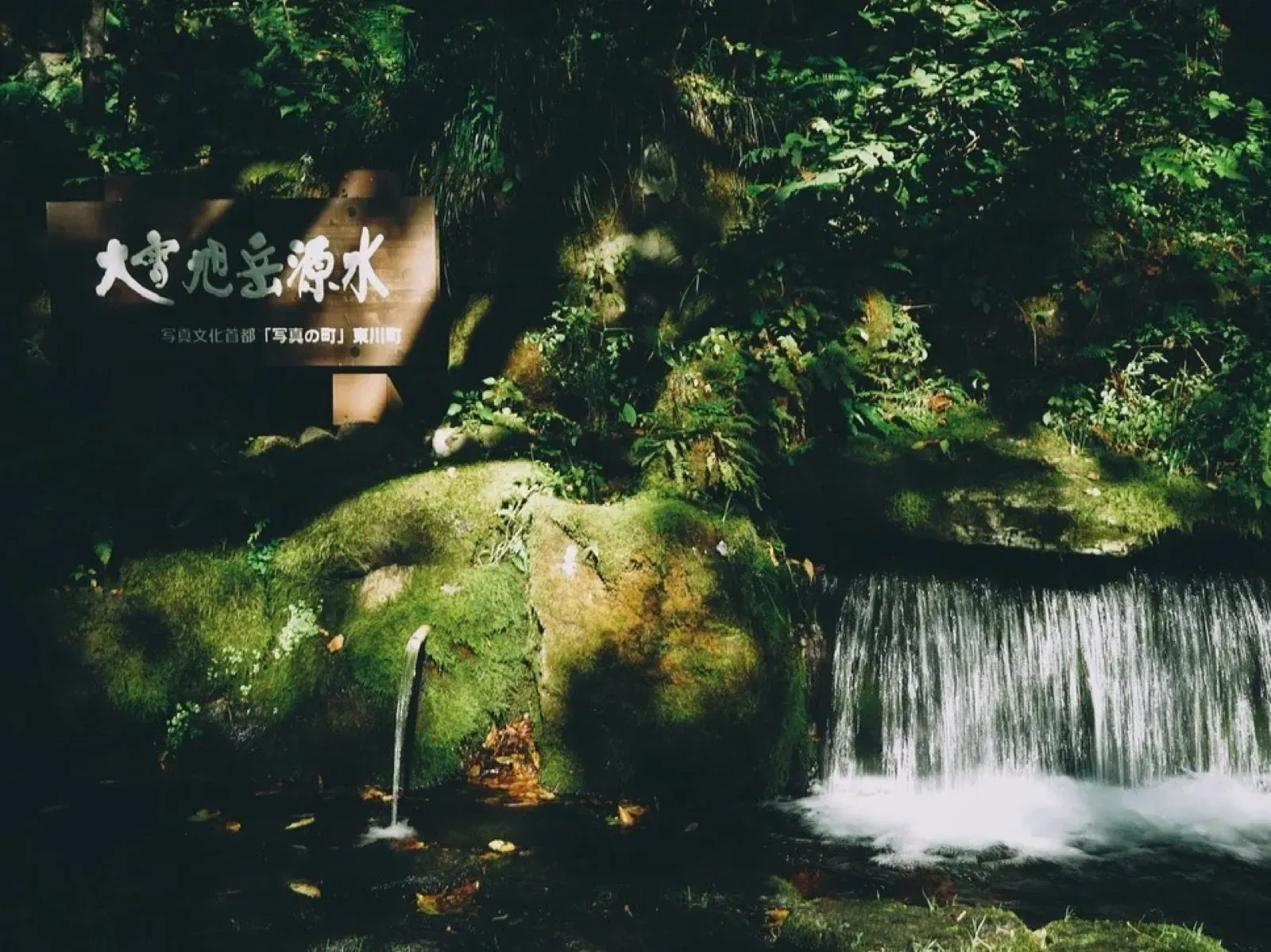
Tankyu Distillery is located in Higashikawa, the only town in Hokkaido with no municipal water system. Crystal-clear spring water, fed by Daisetsuzan snowmelt, flows naturally throughout the entire town. This water, recognized as one of the Exquisite and Well-Conserved Waters of Japan, has a balanced mineral profile of approximately 94 mg/L hardness — classified as medium-hard water (中硬水) — with naturally occurring calcium and magnesium that support the whisky-making process.
The journey from snow to spirit begins high on the Daisetsuzan peaks. Each winter, deep snowfall blankets the mountains. Over decades, this snow slowly melts and seeps through porous volcanic rock, undergoing a natural filtration process that strips impurities and gently enriches the water with trace minerals.
By the time this water surfaces in Higashikawa, it is extraordinarily clean, with a balanced mineral character shaped by the volcanic geology. We use it as our mashing water, our cooling water, and eventually for cutting our whisky to bottling strength. The character of Daisetsuzan is present in every drop.
Our Approach to Hokkaido Whisky
At Tankyu Distillery, we combine traditional whisky-making techniques with cutting-edge technology to pursue our ideal flavour profile.
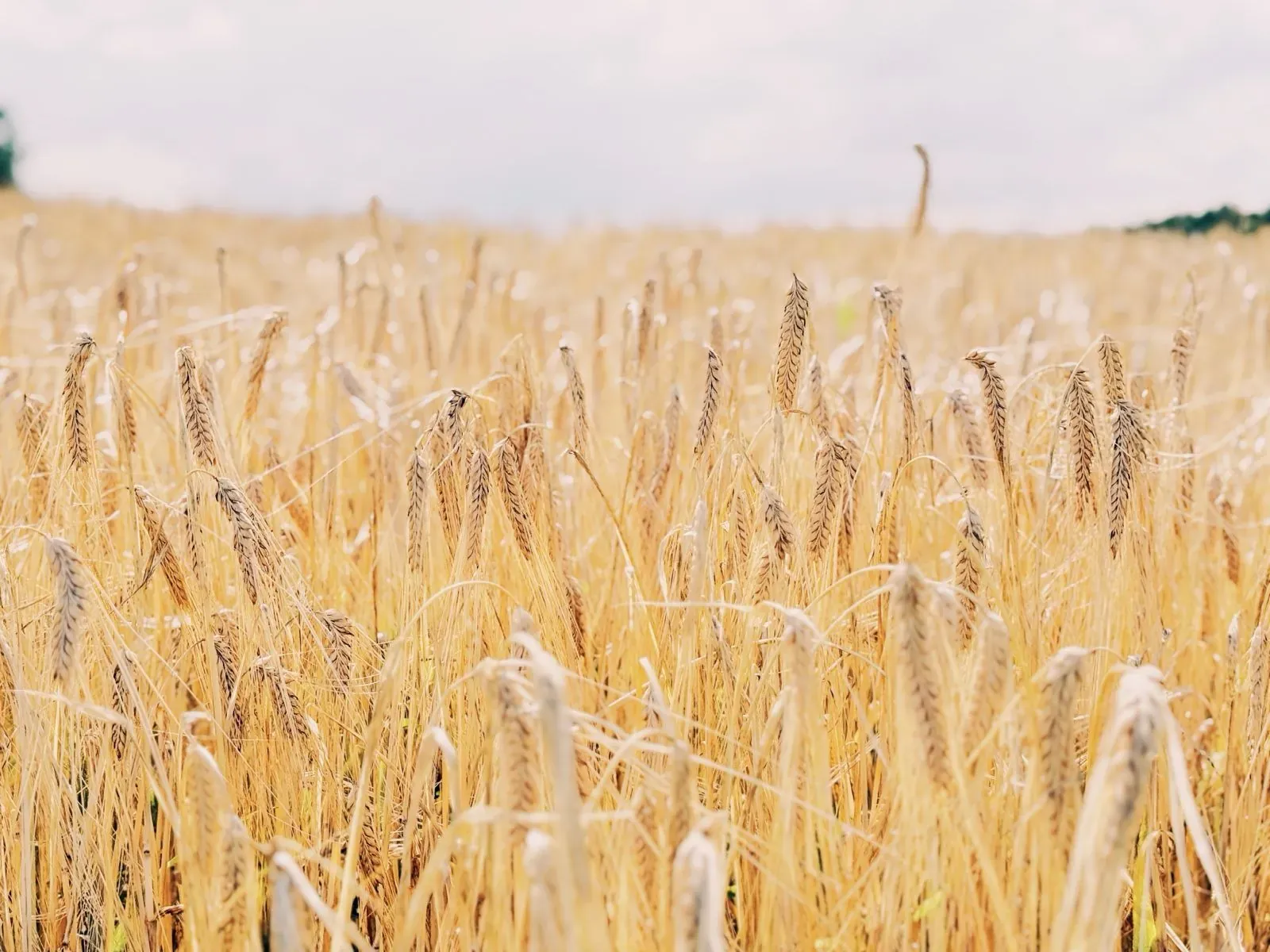
Malt, Milling & High-Gravity Wort
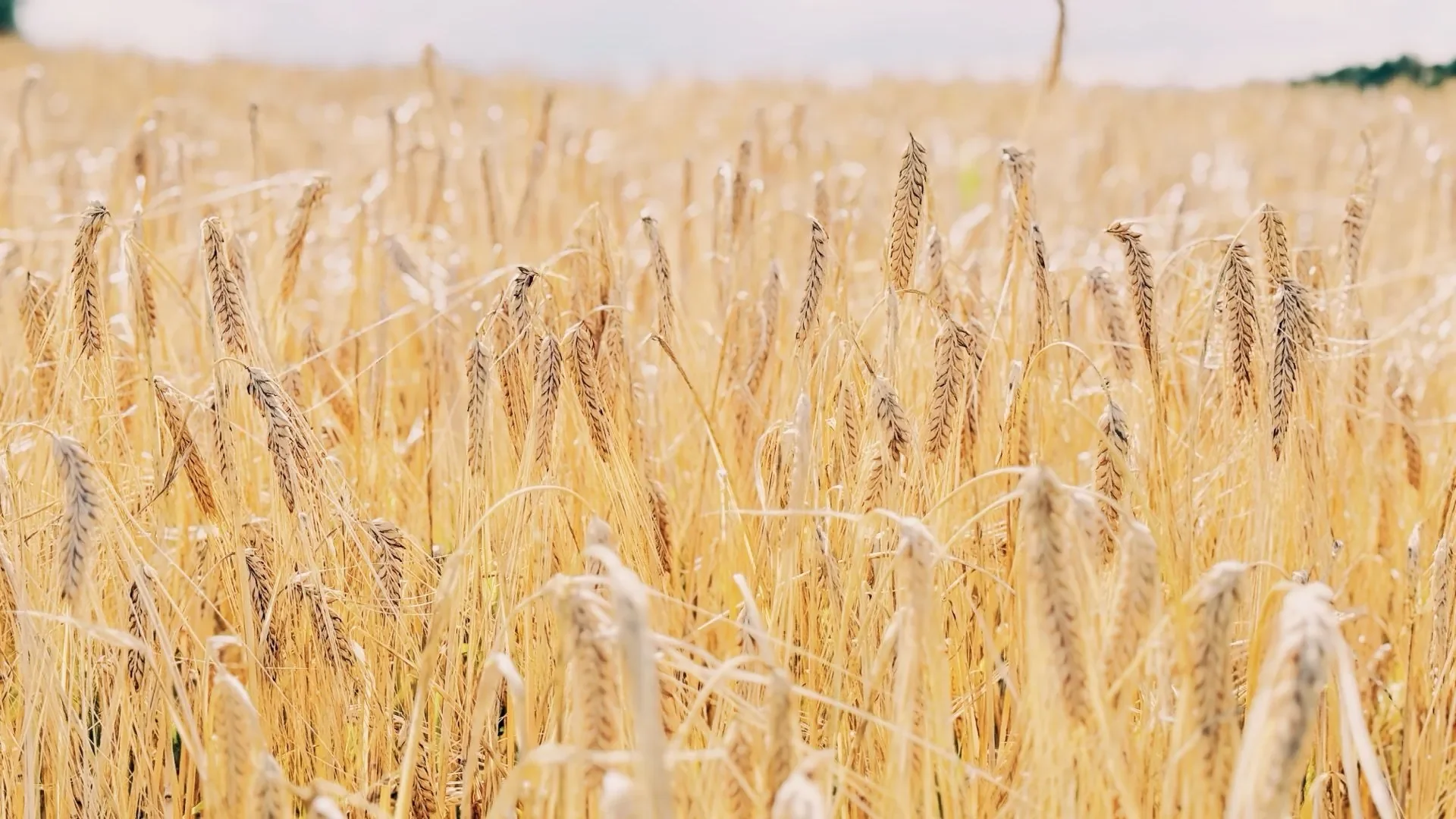
We select our malted barley based on measurable specifications: diastatic power, free amino nitrogen (FAN) levels, and protein content. High diastatic power ensures thorough starch-to-sugar conversion during mashing, while sufficient FAN provides the nitrogen yeast needs for healthy fermentation and controlled ester production. We work across peated and unpeated styles, sourcing Scottish malt.
After milling with a hammer mill, we mash in a stainless steel conversion vessel and extract wort through a mash filter, producing an exceptionally clear, high-gravity wort at an original gravity of 1.080. Higher gravity means more fermentable sugar per litre of wash, which in turn concentrates flavour congeners — the esters, higher alcohols, and organic acids that define the character of new-make spirit.
Our Daisetsuzan water (approximately 94 mg/L hardness, classified as medium-hard) plays a specific role here: the naturally occurring calcium supports alpha-amylase enzyme activity during mashing, while balanced magnesium levels promote healthy yeast metabolism. This mineral profile contributes to a well-rounded fermentation environment where yeast-derived flavour compounds develop with added complexity.
168-Hour Two-Stage Fermentation
At Tankyu we ferment for 168 hours — significantly longer than the industry standard of 48 to 72 hours. The extended duration serves a specific purpose: once yeast has consumed available sugars (typically within 48 hours), lactic acid bacteria naturally present in the environment begin to flourish. These bacteria produce lactic and acetic acids, which react with ethanol and higher alcohols to form esters — the compounds responsible for fruity, floral, and creamy notes in the final spirit.
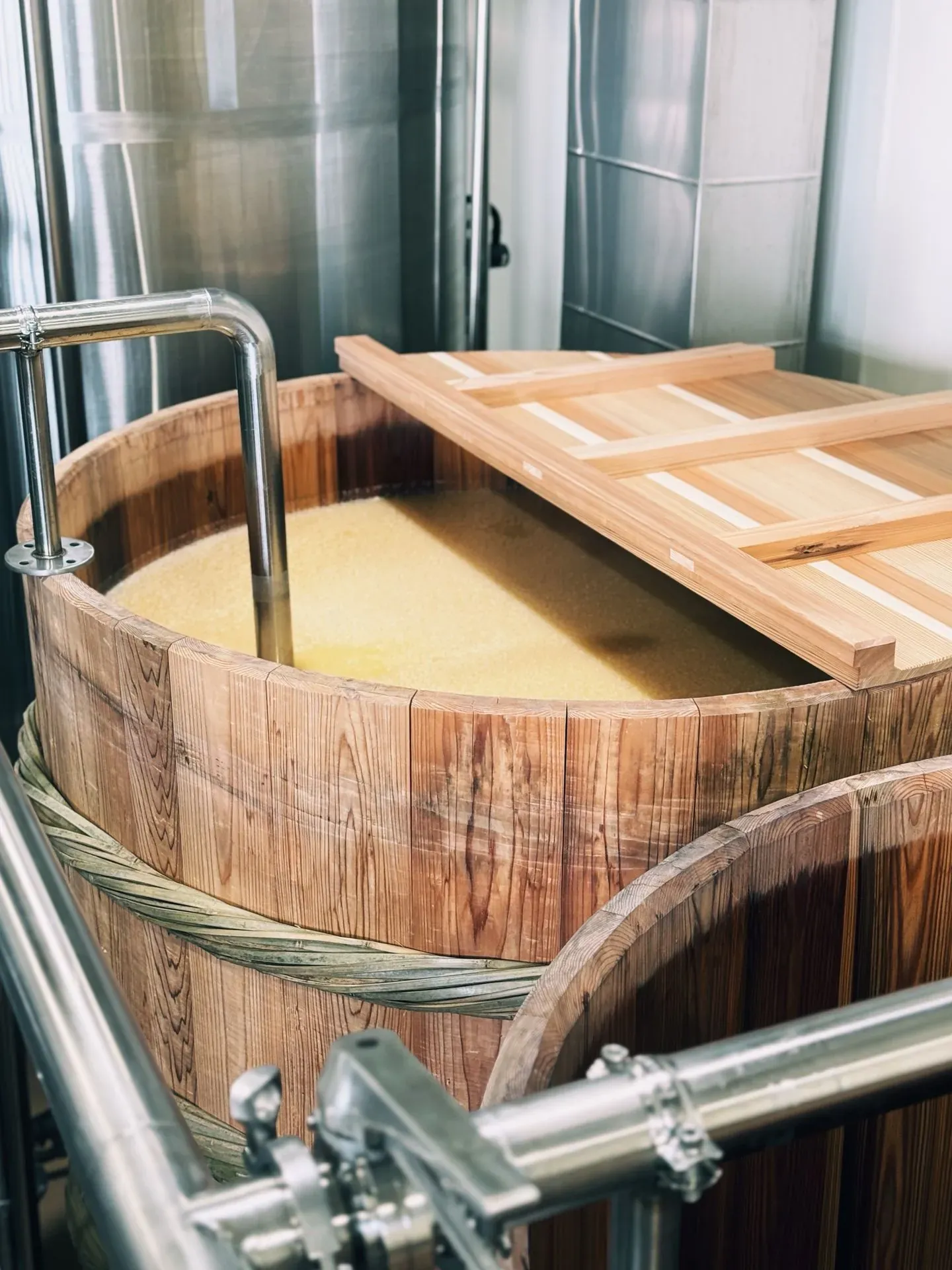
We divide fermentation into two stages. The first three days take place in jacketed stainless steel washbacks, where precise temperature control keeps yeast activity steady and predictable. The wash then transfers to handcrafted wooden washbacks built by the 結い物で繋ぐ会 (Yuimono de Tsunagu Kai), a Hokkaido-based cooper collective, for four days of secondary fermentation. The wood harbours a resident microflora of lactobacilli — each washback developing its own bacterial character over time, contributing a layer of complexity unique to our distillery.
The washbacks are constructed from Hokkaido cedar bound with bamboo hoops. Cedar's open grain structure provides surface area for bacterial colonisation, while the bamboo hoops allow the wood to expand and contract with seasonal temperature shifts. This combination of controlled primary fermentation and living secondary fermentation produces a wash rich in congeners that carry through distillation.
Distillation & Reflux Control
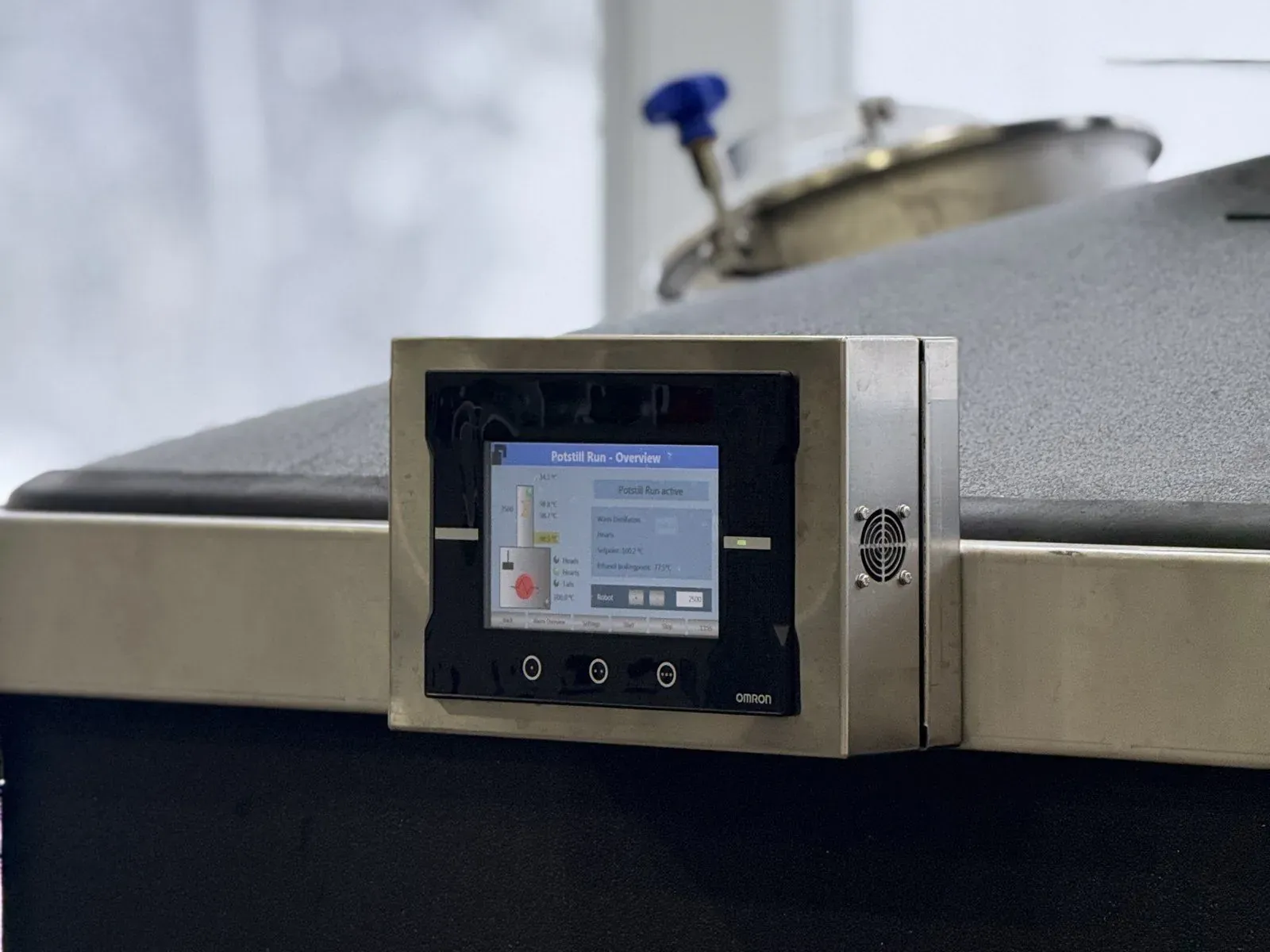
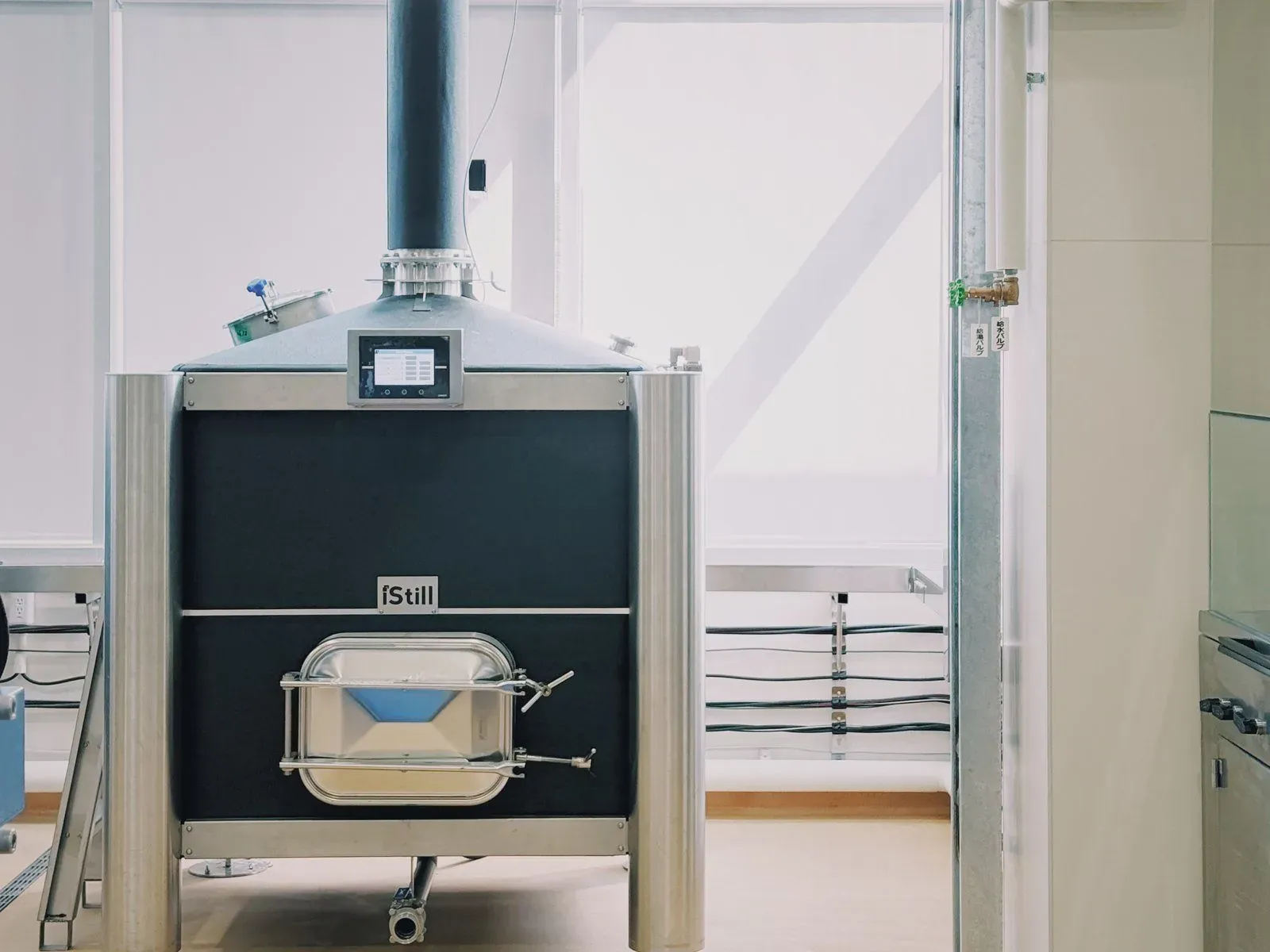
Tankyu Distillery operates two iStill 2000 hybrid stills from the Netherlands. These combine pot-still and column-still functions in a single unit with programmable reflux ratios, allowing us to dial in the exact degree of copper contact and vapour condensation for each run. Higher reflux produces a lighter, more delicate spirit; lower reflux retains more weight and congener complexity.
Cut-point management is where the congener profile of the wash becomes the flavour profile of the spirit. Foreshots carry volatile aldehydes and ethyl acetate; the heart fraction is rich in desirable esters and higher alcohols; feints contain heavier compounds and fusel oils. We taste continuously during each run and define narrow cut windows to capture a heart fraction that balances fruitiness, body, and clean finish.
After distillation, our new-make spirit is filled into casks at approximately 63.5% ABV. At this strength, the ratio of ethanol to water optimises extraction of vanillin and lignin-derived compounds from the oak while limiting aggressive tannin pull. The spirit is adjusted with the same Daisetsuzan spring water used throughout production.
Maturation & Cask Strategy
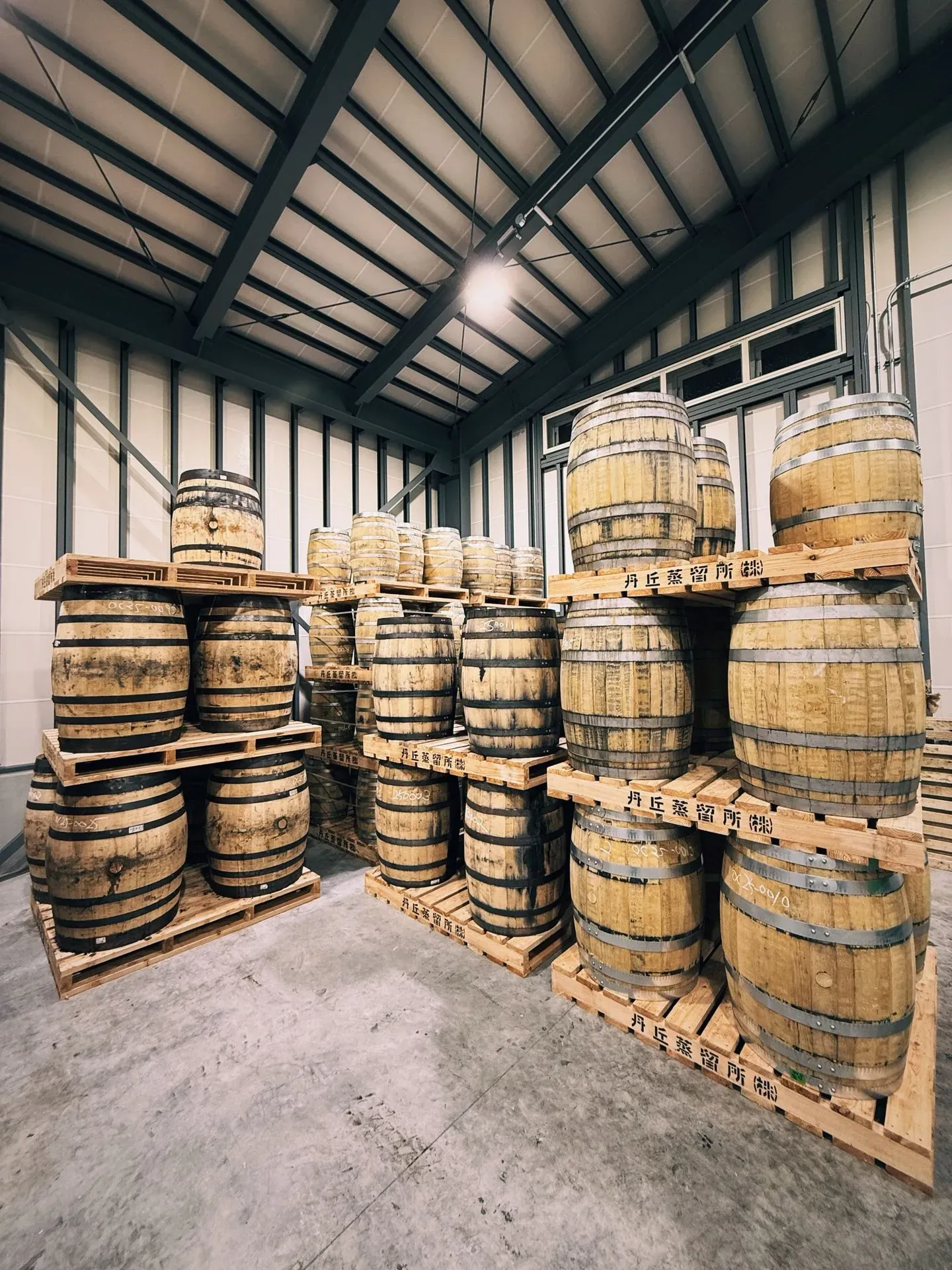
We mature spirit across a range of cask types, each contributing a distinct extraction profile. Ex-Bourbon barrels (charred American white oak) release vanillin, lactones, and caramel compounds. Ex-Sherry hogsheads — both Oloroso and Pedro Ximénez — impart dried-fruit richness, tannin structure, and warm spice. Mizunara (Japanese oak) casks from a heritage cooperage in Toyama contribute sesquiterpenes that express as sandalwood and incense-like aromatics.
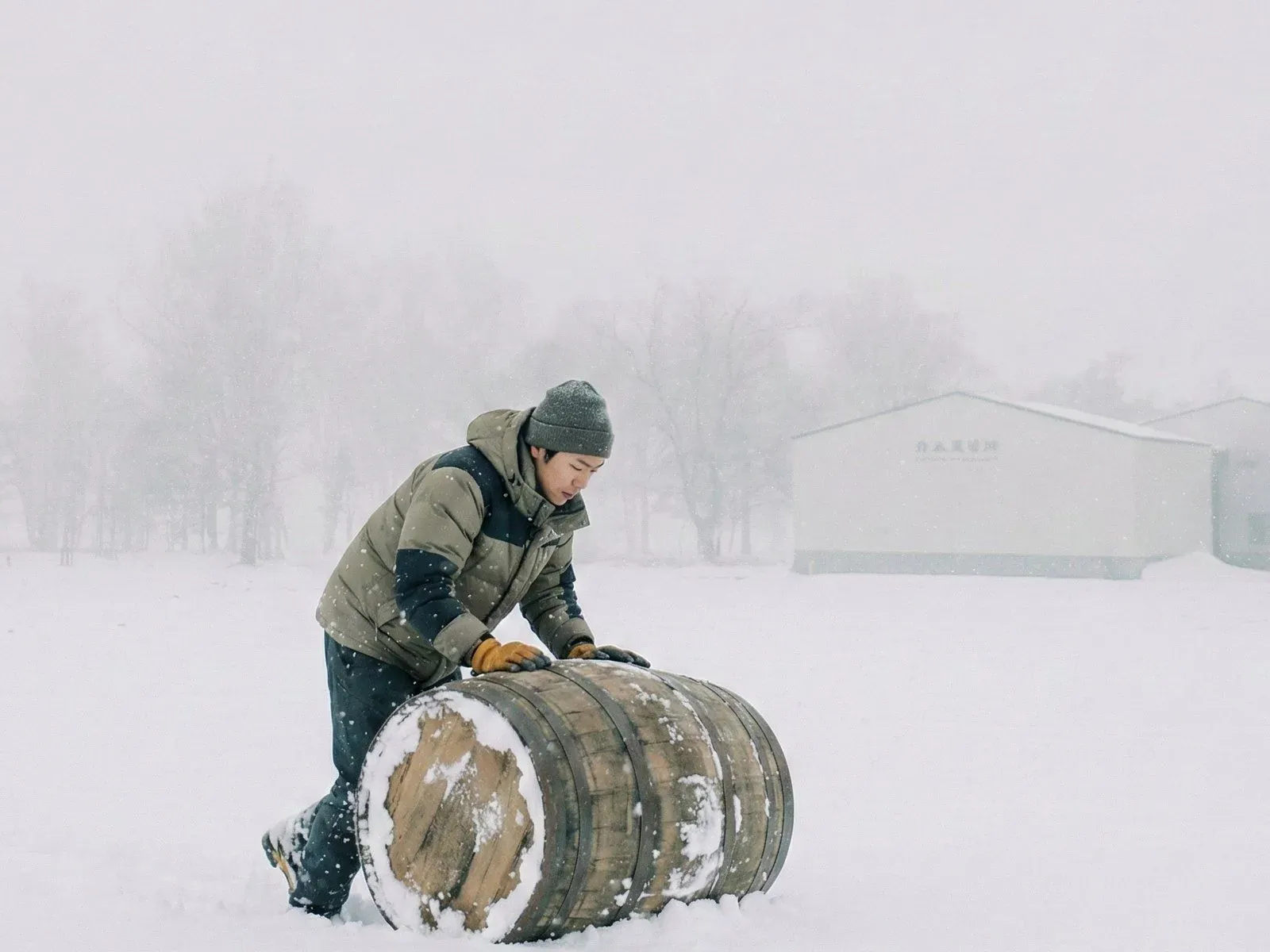
Hokkaido's 66.3°C annual temperature swing drives an aggressive seasonal breathing cycle in the cask. In summer, rising temperatures cause the oak staves to expand, pushing spirit deep into the charred wood grain where it extracts colour, tannins, and lignin-derived flavour compounds. In winter, contraction draws the spirit back, concentrating these extracts. This cycle of expansion and contraction is measurably more pronounced than in temperate climates, accelerating the rate of maturation.
We also use compact Octave casks (approximately 50 litres), whose high surface-area-to-volume ratio increases the rate of spirit-wood interaction. A 50-litre cask exposes roughly three times more wood surface per litre of spirit than a standard 200-litre barrel, enabling us to study extraction curves and flavour development at an accelerated pace.
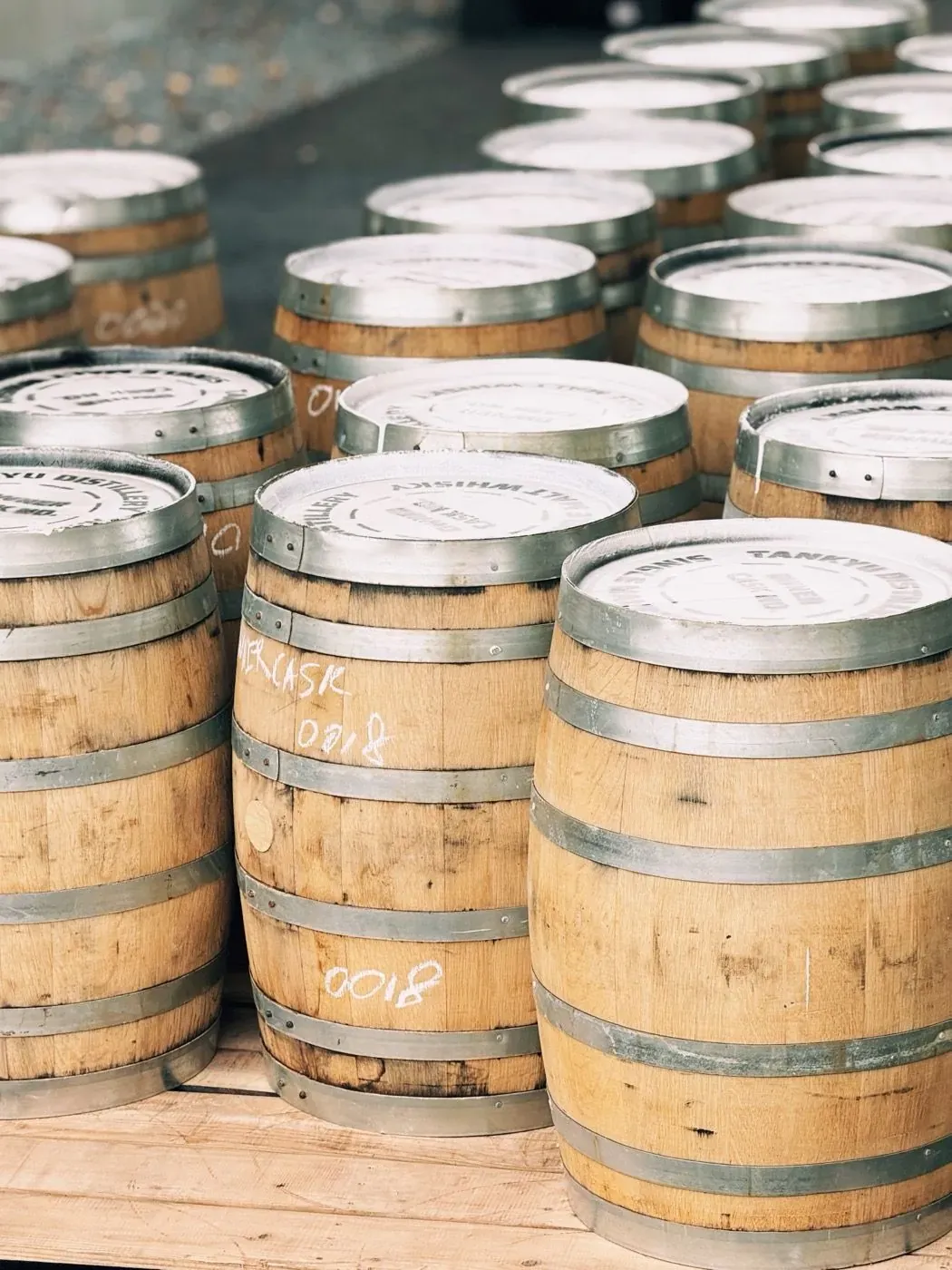
Private Cask Ownership
A rare invitation toown a cask of Hokkaido whisky.
Reserve a private consultation with our cask specialists. In a dedicated session, we will present the cask types, wood selections, and maturation profiles available exclusively to private owners.
Explore Further
Explore More
Discover other sides of Tankyu Distillery